In this article
What actually happens before a wedding violinist plays the first note?
From a guest's point of view, a wedding musician appears in position, picks up the instrument and starts playing.
That is exactly how it should feel.
There is usually quite a bit happening before that first note, though. Understanding it is useful for couples because a handful of simple details can make the whole setup disappear into the background of the day.
Arrival happens earlier than performance time
If music is due to begin as guests arrive, the performer cannot arrive at the same time as the guests.
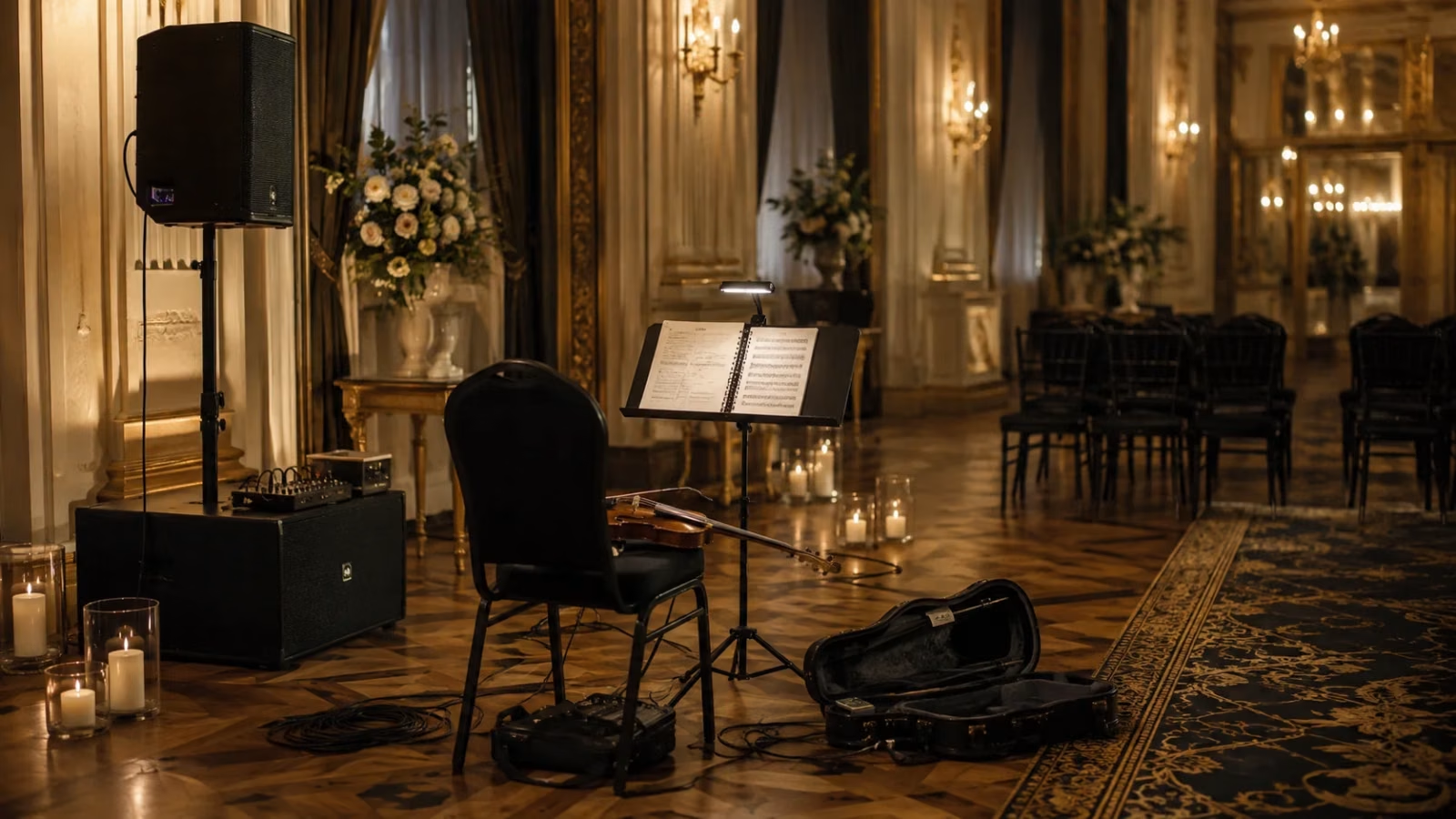
There has to be time to unload, find the right room, set up, check the sound and deal with anything unexpected before the wedding becomes busy.
You do not need to build a separate timetable for this. Just make sure the entertainment supplier has the correct venue address, access information and the time they are expected to be ready.
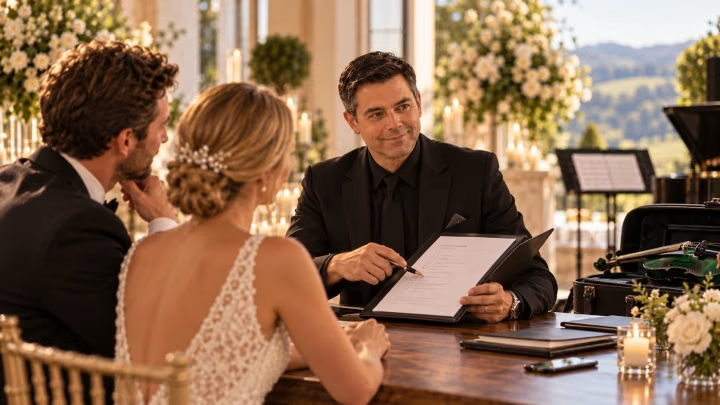
A venue contact is incredibly useful
On the wedding morning, you should not be fielding questions about sockets, loading doors or which terrace is being used.
Give suppliers a venue contact or coordinator where possible.
That allows practical questions to be dealt with directly while you are getting ready, having photographs taken or meeting the registrar.
The performance space gets checked before guests settle in
A ceremony room can look very different when empty compared with twenty minutes later when chairs, flowers, photographers and guests are all in place.
The musician needs to know where they can perform without blocking the aisle, photographer or entrance route.
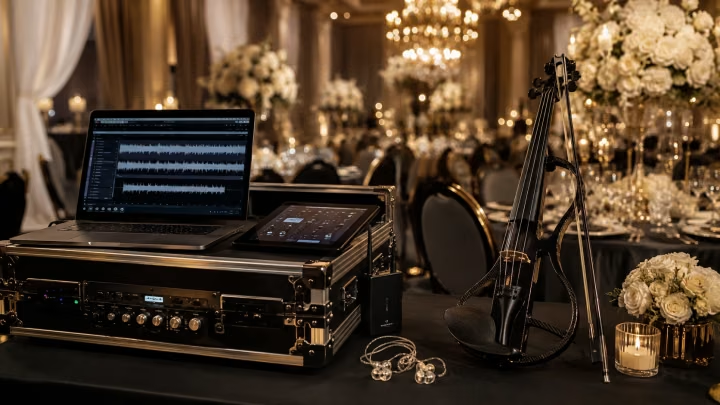
For amplified music, the sound also needs to suit the room. A small ceremony space requires a completely different level from a large hall or outdoor terrace.
The couple's job is not to set that level. It is simply to make sure the agreed performance area is available in time.
Special songs are prepared before the day
If you have requested a particular entrance song, signing piece or exit track, that work should already be done before the wedding.
The wedding morning is for checking that everything is ready, not learning the music.
For you, that means special requests should be supplied by the deadline agreed with the musician and any important version details should be clear. If there is a particular recording you love, send the link rather than relying on the title alone.
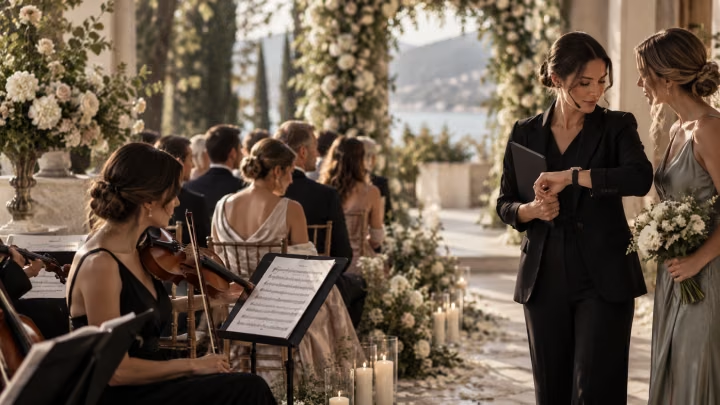
Timings are checked against the real ceremony
Wedding ceremonies are live events, so the entrance may not happen at the exact second shown on a planning spreadsheet.
The registrar may still be speaking to somebody. A bridesmaid may need another minute. Doors may be waiting to close.
A good performer is watching the coordinator rather than blindly starting because the clock changed to 1.00pm.
That is why a clear cue or a named person coordinating the entrance is more useful than an ultra-detailed minute-by-minute instruction.
Small delays are normal
A ceremony starting ten minutes late does not mean the day has gone wrong.
Live musicians are used to guests arriving slowly, photographs taking longer and plans shifting slightly.
What helps is communication. If the venue knows there is a delay, they can pass that on without somebody needing to come and find you.
What couples actually need to provide
Before the wedding, make sure your musician has:
- the correct venue and performance locations;
- sensible arrival/access information;
- the agreed start and finish times;
- your ceremony music choices or special requests;
- a venue/coordinator contact where possible;
- details of any room move or outdoor plan;
- the wet-weather alternative if relevant.
That is enough.
You do not need to plan the cables, speaker position or setup sequence. The whole point of using an experienced supplier is that those details are dealt with without becoming part of your wedding-day workload.
The best setup is the one you barely notice. You should simply walk into the room and hear the music already doing its job.