In this article
Should you have live music while guests arrive at your wedding ceremony?
The ceremony does not really begin when you walk down the aisle.
For your guests, it begins when they enter the room, find their seats and realise that this is now your wedding, not simply another function room they have walked into.
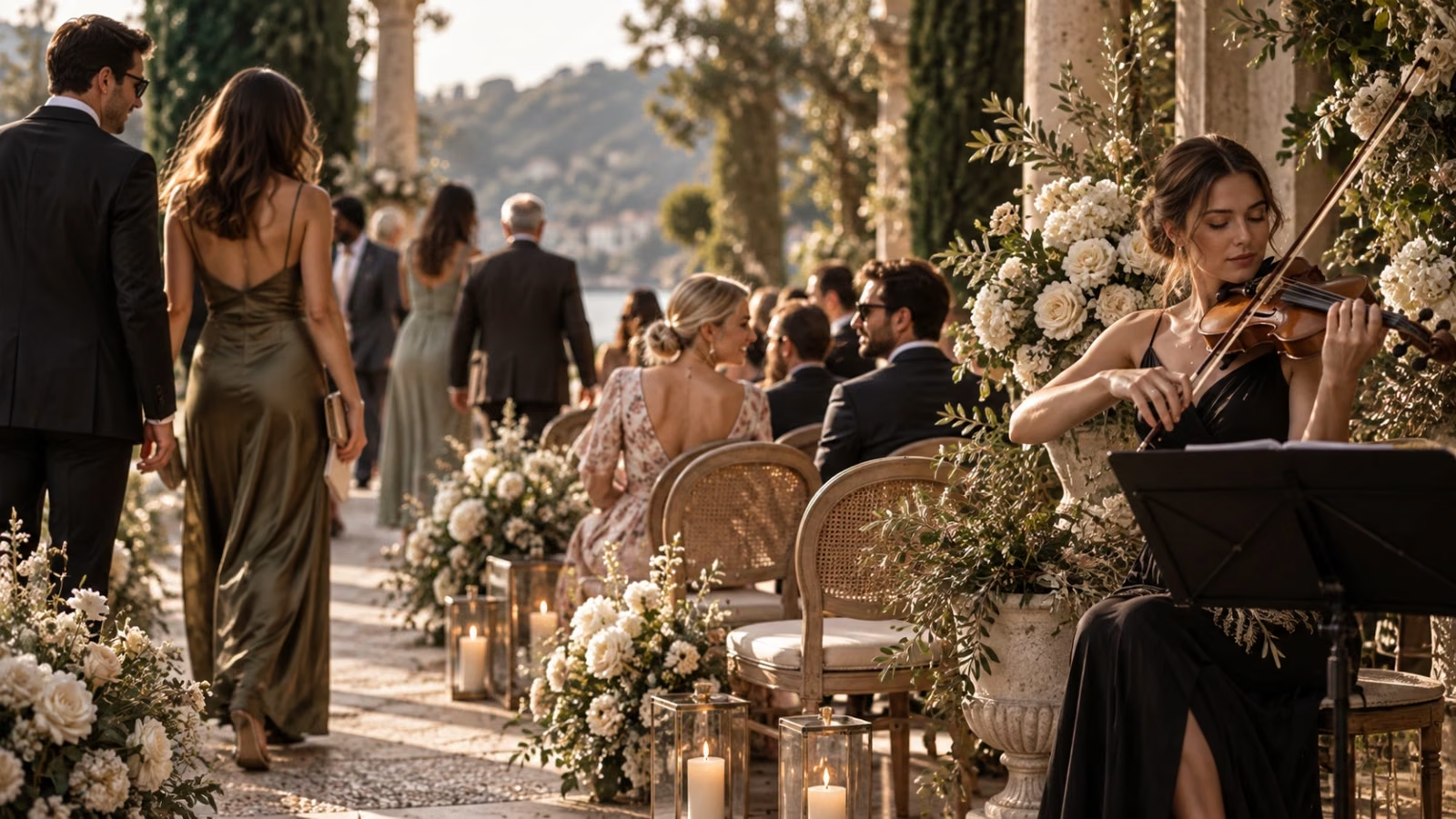
Live music during guest arrival can make that transition feel much more deliberate.
It removes the awkward waiting-room feeling
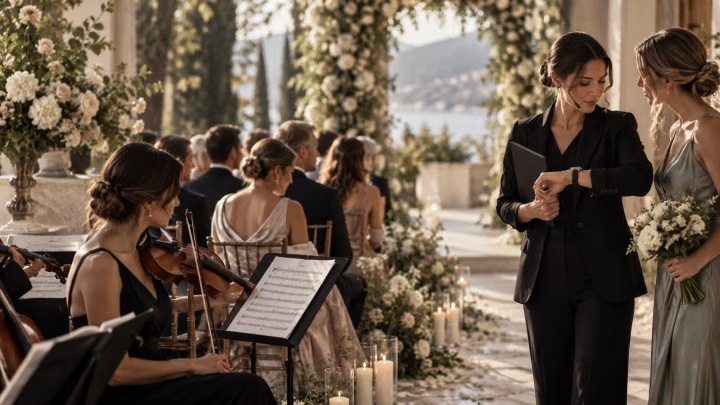
Without music, guests often arrive to the sound of chairs moving, quiet conversation and somebody checking whether they are sitting on the correct side.
That is not terrible. It is just not especially atmospheric.
Live music gives the room a mood immediately and lets guests settle without feeling as though they are waiting for something to start.
You usually do not need a huge amount of time
Around 20 to 30 minutes before the ceremony is enough for many weddings.
That covers the main arrival period without turning it into a separate concert.
If your venue asks guests to arrive particularly early, or transport is bringing everybody together, you may want a little longer.
It gives you breathing room if the ceremony is slightly late
Weddings rarely run to the exact second.
A registrar meeting may take longer, a photograph may need finishing or somebody important may still be making their way to the room.
If live music is already playing, a short delay feels much less obvious to guests. The atmosphere simply continues until the entrance is ready.
That does not mean you need to plan for a long delay. It just gives the opening of the day a little resilience.
The music can be different from your entrance song
Guest-arrival music is a good place to use songs you love without attaching them to one specific ceremonial moment.
You might choose modern pop, film themes, lighter classical pieces or a mix of styles that reflects the rest of the day.
Your entrance song can then still feel distinct when it begins.
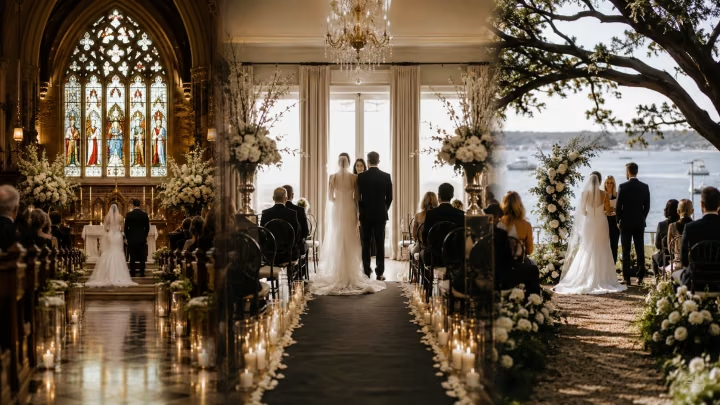
Churches and civil venues feel different
In a church, music before the ceremony can feel very natural because the building already has a sense of occasion.
In a hotel or civil ceremony room, it can be even more useful because it transforms a familiar event space into something that feels personal to your wedding.
Neither is better. The effect is simply different.
Think about where guests actually enter
If guests walk straight into the ceremony room, the music becomes part of their first impression.
If they gather elsewhere and are only seated at the last minute, there may be less value in a long pre-ceremony set.
Ask your venue how arrivals normally work. That will tell you whether 15 minutes, 30 minutes or no separate arrival set at all makes most sense.
It is particularly useful for intimate ceremonies
In a small room, every bit of silence is noticeable.
Live music can make an intimate wedding feel warm rather than sparse, especially while a smaller number of guests are arriving one by one.
Do you need to choose every song?
Usually, no.
You can give the performer a general style, a few favourites and any definite “do not play” choices. Save your most important selections for the entrance, signing and exit.
That gives you personal music without creating another long planning job.
Is it worth adding to your package?
If you care about the atmosphere of the ceremony before the main entrance, I think it often is.
If guests are being seated very quickly and you are trying to keep the booking tightly focused on the key ceremony moments, it may be unnecessary.
The decision comes down to what you want guests to feel during those first few minutes.
If you are comparing ceremony options, the Weddings page shows how arrival music can fit alongside the entrance, signing and exit.