In this article
Civil, church or celebrant ceremony: what changes for the music?
A wedding ceremony is not just a wedding ceremony from a musician's point of view.
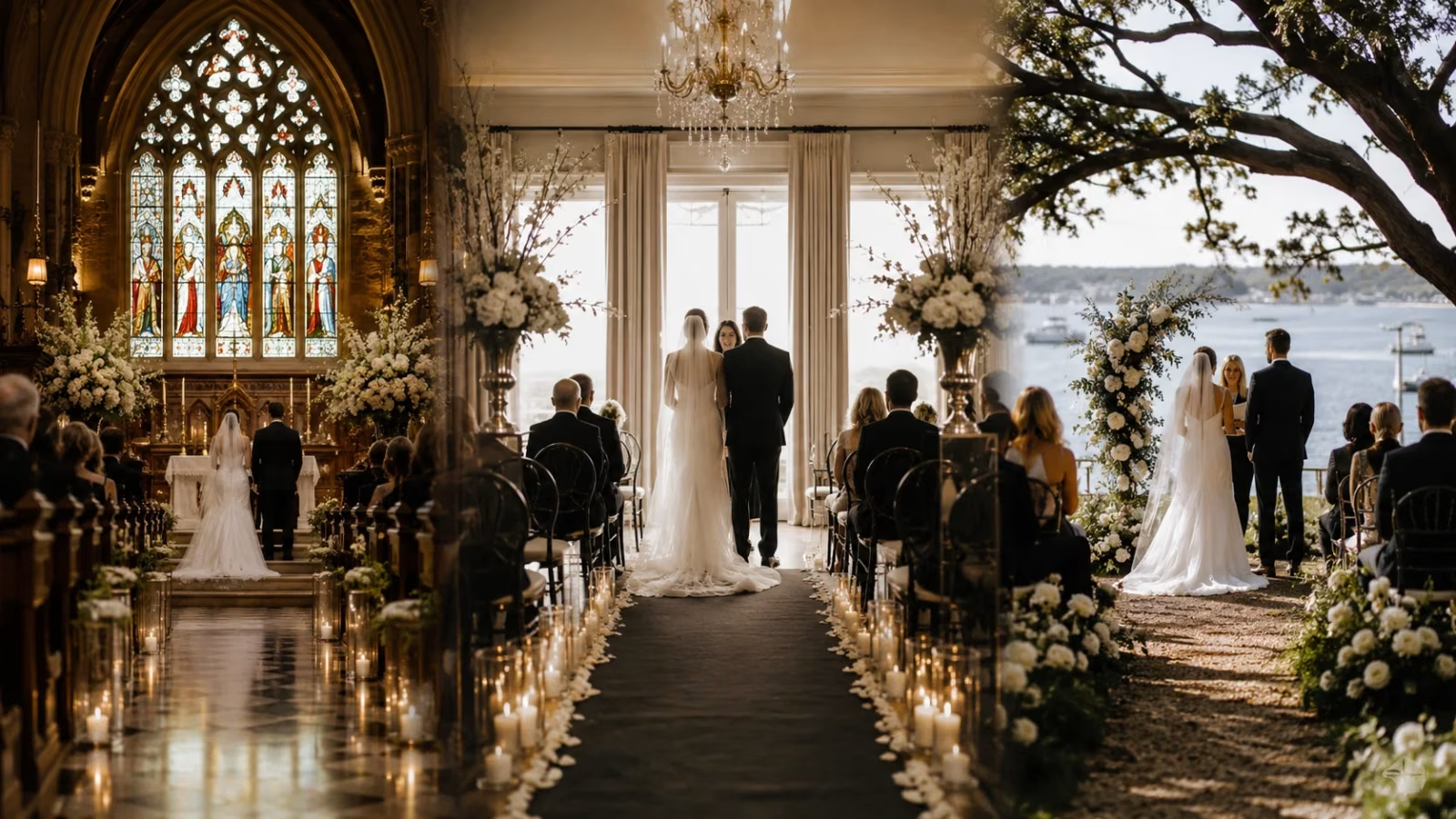
A civil ceremony in a hotel, a church service and a celebrant-led ceremony may all contain an entrance, vows and an exit, but the structure around those moments can be completely different.
That affects how much music you need, where it can be used and how tightly anything can be planned.
Civil ceremonies are often short and structured
A registrar-led civil ceremony is usually quite clear in shape.
There is guest arrival, the entrance, the legal ceremony, signing the register and the exit. Readings may be included. The exact wording and rules are controlled by the registration service rather than the venue.
One important point is that registrars can have restrictions around religious content. If you want a particular song with religious lyrics, check with the registrar rather than assuming it will be fine because the violin version has no singer.
Different registration services can interpret things differently, so the safest answer is always the one from the registrar conducting your ceremony.
Timing-wise, civil ceremonies can move quickly. That makes flexible entrance and signing music particularly useful because there is not much spare time between the formal sections.
Church weddings can need much more music
A church service may include hymns, readings, prayers, communion and other elements depending on the denomination and the particular service.
You might therefore need music for:
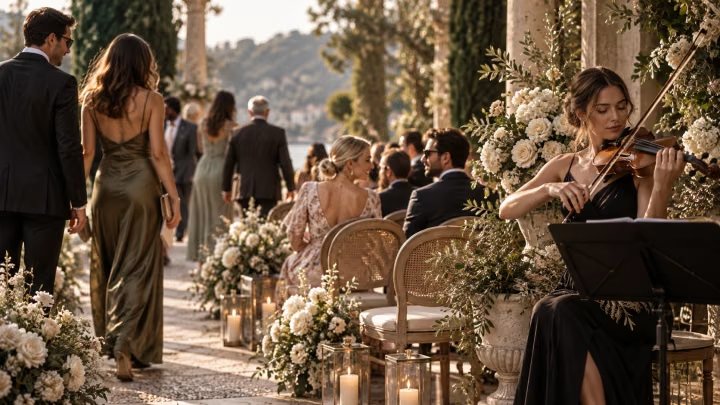
- guests arriving;
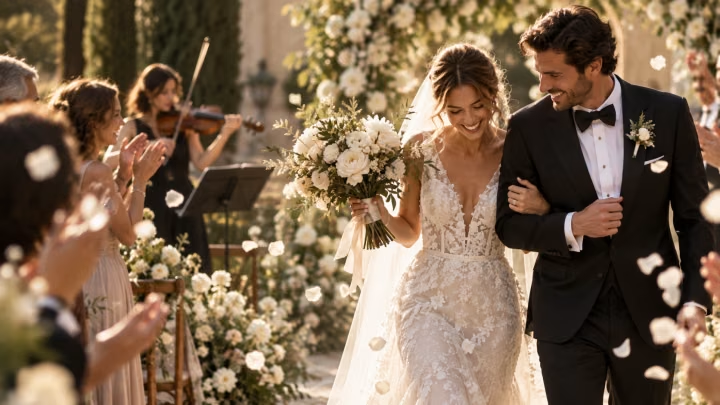
- the entrance;
- hymns or worship songs;
- signing the register;
- reflective moments;
- the exit.
The organist, church music director or officiant may also have their own requirements. Some churches have policies about visiting musicians or the use of amplification, so it is worth checking before the week of the wedding.
Church acoustics are another factor. A large stone building can make a violin sound fantastic, but it can also create a long echo. Something fast and heavily rhythmic may need handling very differently from the same song in a carpeted hotel room.
Celebrant ceremonies give you the most freedom
A celebrant-led ceremony is usually where couples can be most creative.
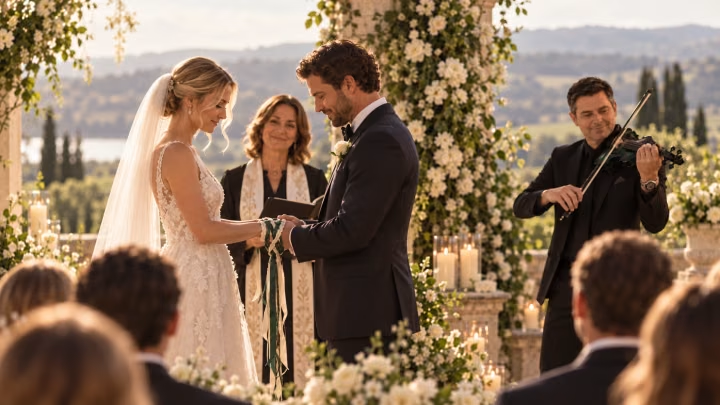
You might have personal vows, symbolic rituals, family involvement, music during a handfasting, a drink ceremony, candle lighting, readings or anything else agreed with the celebrant.
That freedom is brilliant, but it means the musician needs a clear running order.
If you want thirty seconds of music while something happens, say what the action is rather than simply writing "music - 30 seconds". Live moments do not always take the time predicted on paper.
Knowing what I am accompanying lets me react properly if it takes longer or finishes sooner.
The entrance works differently in every space
A church aisle can be long enough for a complete section of music. A hotel ceremony room might have a door six metres from the front. An outdoor celebrant ceremony might involve a long walk across a lawn.
That is why I always want to know the venue and the entrance plan.
The same song can work in all three settings, but I may arrange or start it differently so the best part lands at the right moment.
Signing music is not identical either
In a civil ceremony, signing and photographs can create a natural music window.
In church, the register may be signed in a side chapel or vestry while the congregation remains seated, so the music has a slightly different job.
In a celebrant ceremony, there may not be a legal signing at all if the legal marriage has happened separately. You may instead choose music for another symbolic moment or have no equivalent section.
Do not choose three signing songs simply because a generic checklist says you need them. Choose music for the ceremony you are actually having.
Talk to the person conducting the ceremony
The registrar, priest, vicar or celebrant is the person who knows the structure and any restrictions.
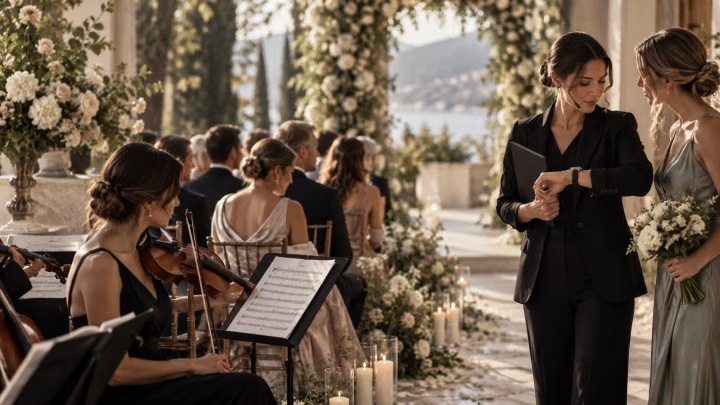
Once they have confirmed what is happening, send the relevant details to your musician. That is much better than having three different suppliers working from three different assumptions.
The music should fit around the ceremony rather than forcing the ceremony into a standard template. Once the structure is clear, the rest is usually straightforward.