In this article
When should you have live music at your wedding reception?
"When should we have you play?" is a much better question than "How many hours can we fit in?"
Live music can work at several points during a wedding reception, but it is doing a different job in each one. More music is not automatically better. The right set in the right place will do far more for the atmosphere than trying to fill every spare minute of the day.
The drinks reception is the easiest win
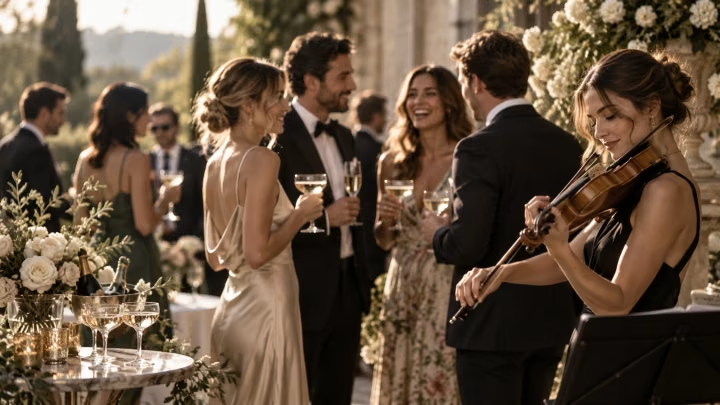
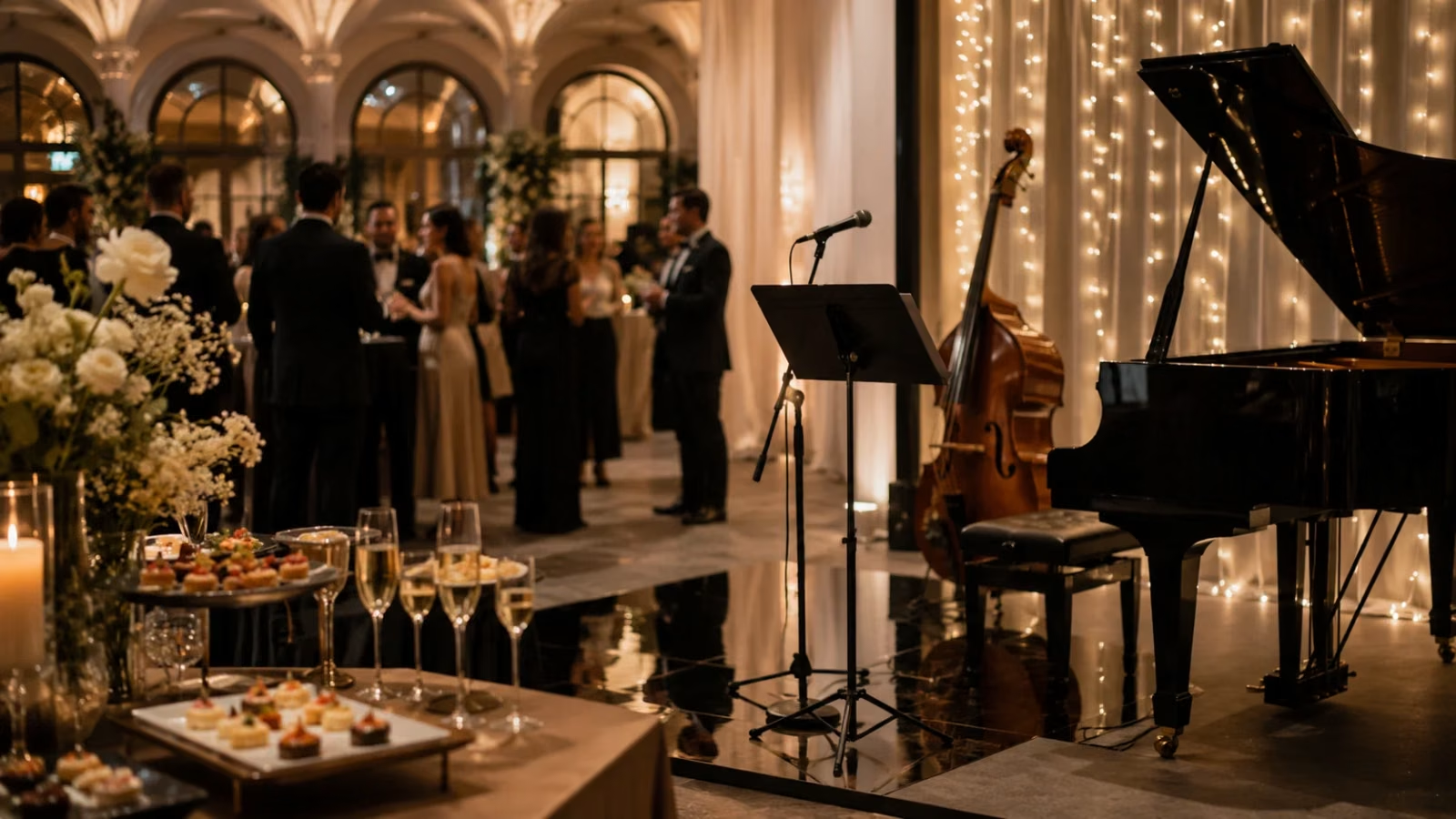
If I had to choose one part of the reception where live music works almost every time, it would be the drinks reception.
The formal ceremony has finished. People are moving around, finding drinks, congratulating you, talking to people they have not seen for years and waiting for photographs or the wedding breakfast.
Music fills the space without demanding everybody's attention.
It also helps bridge those little gaps that are completely normal at weddings. If photographs run slightly late, guests are not simply standing in a quiet room waiting for a door to open.
This is where I can mix recognisable songs, requests and different styles without every piece needing to have a big ceremonial meaning.
During the wedding breakfast, volume matters more than repertoire
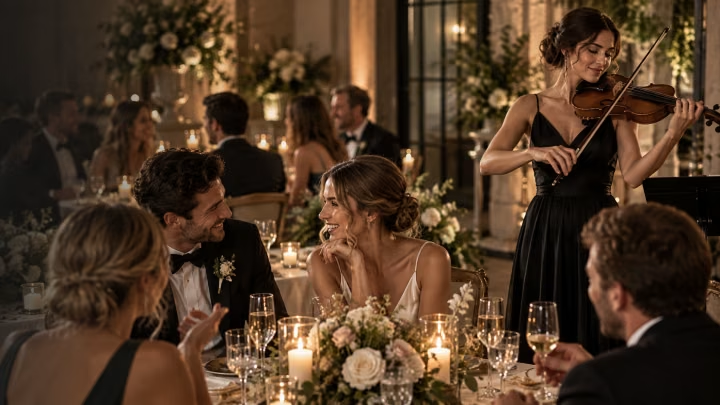
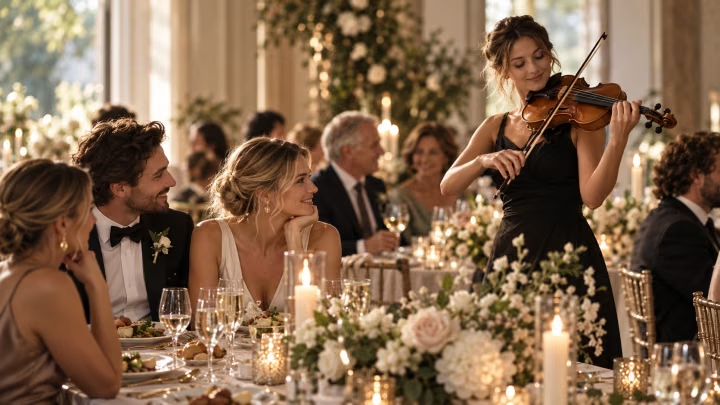
Live music during the meal can be lovely, but the job is very different.
People want to talk. There may be several tables between the musician and some of the guests. Waiting staff are moving around and the room itself may already be noisy.
The answer is not to keep turning the volume up until everybody can hear every note. If the music is stopping conversation, it is too loud for that part of the day.
Background music should sit under the room, not fight it.
Some venues work brilliantly for this. Others have layouts where a musician is hidden behind pillars or placed at one end of a long room, which makes it harder to keep the level balanced. It is worth thinking about the room before deciding that meal-time music is essential.
The room turnaround can be surprisingly useful
After the wedding breakfast, there is often a period where the main room is being reset for the evening.
Guests move to a bar, terrace or another room. This can be a slightly awkward bit of the day if there is nothing happening, particularly when evening guests start arriving at the same time.
Live music here can create a proper transition into the evening rather than making it feel like everybody has been temporarily evicted while tables are moved.
Evening music needs a clear job
Once the DJ or band is starting, I would not automatically add another live set just because there is a gap in the invoice.
Think about what you want it to do.
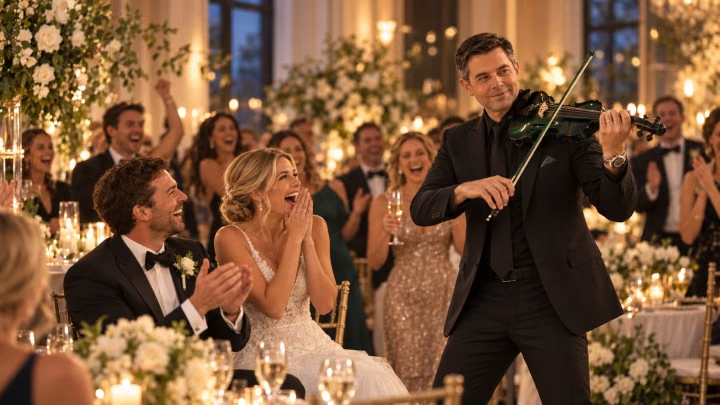
A high-energy violin set alongside dance tracks can kick the party up a gear. A live performance before the first dance can gather everybody around the floor. A surprise entrance can work if it suits the crowd and the running order.
But if the DJ already has a packed dance floor at 10.30pm, stopping everything for an unrelated forty-minute set may do the opposite of what you want.
Good evening entertainment should build momentum, not keep resetting it.
Move the music with the guests
This is a practical point that gets missed.
If everybody is outside because the weather is gorgeous and the musician is inside playing to twelve empty chairs, the plan is not working.
Where possible, I want to be where the atmosphere is. That may mean setting up near the terrace for drinks and moving later, or choosing the space that is actually being used rather than the one that looked nicest on the floor plan six months earlier.
There are limits because of power, weather and setup time, but the general rule is simple: entertainment works best where the people are.
You do not need live music everywhere
I am obviously in favour of live music. I am not going to pretend it needs to be playing every minute from the ceremony until midnight.
Pick the parts of the day where it adds something.
For most couples that means using live music to create atmosphere during the ceremony and drinks reception, then letting the evening entertainment take over properly later on.
For others, the meal or evening set is the main event.
There is no universal package that suits every wedding. Look at the shape of your day, the venue and the sort of atmosphere you want, then put the music where it will actually be noticed for the right reasons.