In this article
How loud should wedding entertainment actually be?
Volume is one of those wedding details nobody thinks about until it is wrong.
Too quiet and the entertainment feels distant. Too loud and guests start leaving the room because conversation has become hard work.
The right level changes constantly through the day.
Ceremony music should feel present, not amplified
During a ceremony, the room is usually quiet.
That means very little amplification may be needed.
The violin needs enough support to sound full and reach the back of the space, but it should not feel like a stage PA has suddenly appeared in the middle of the vows.
Churches and hard rooms often need even less because the building does a lot of the work acoustically.
Drinks receptions get louder by themselves
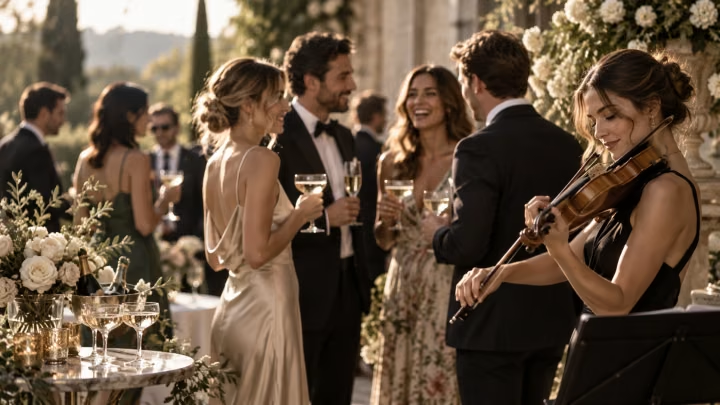
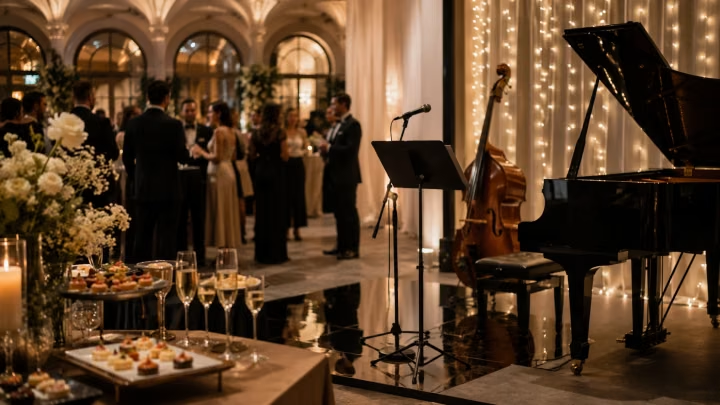
Put fifty people in a room with drinks and the background level rises quickly.
Add another fifty and it rises again.
That means a volume that felt perfect at the beginning of the reception may need increasing later simply to stay in proportion with the room.
This is normal.
Good live sound follows the environment rather than staying fixed.
Wedding breakfasts need restraint
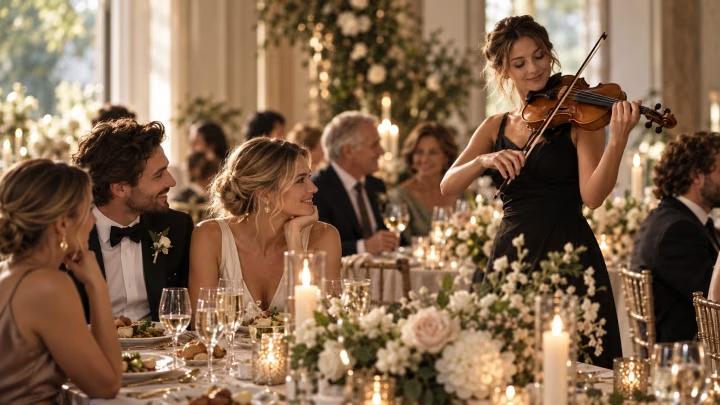
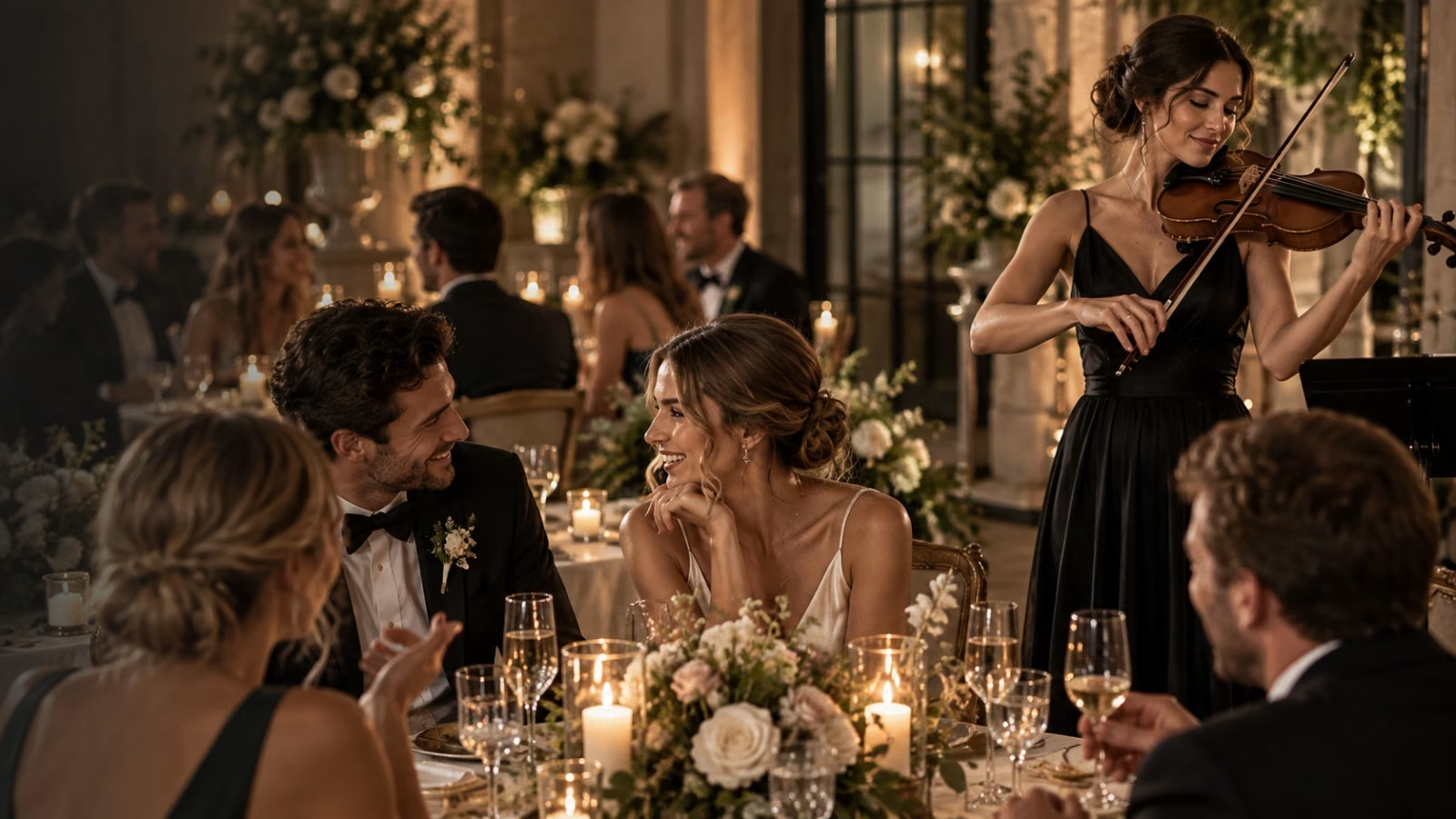
If people are seated and eating, they should be able to talk across the table.
Live music can still be clear and energetic without dominating every conversation.
The difference between “atmosphere” and “noise” is often only a few decibels and some sensible speaker positioning.
Evening entertainment is different
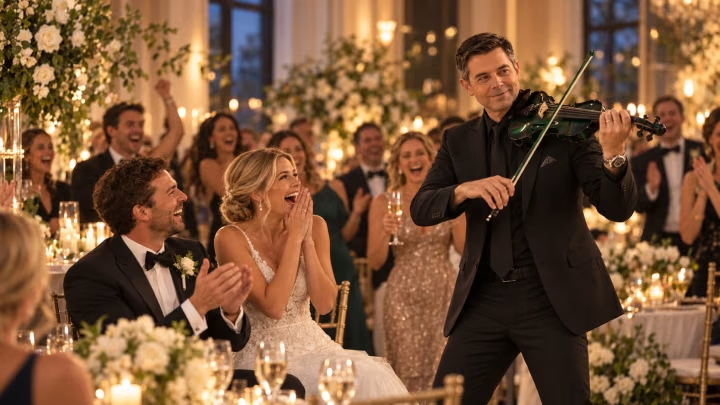
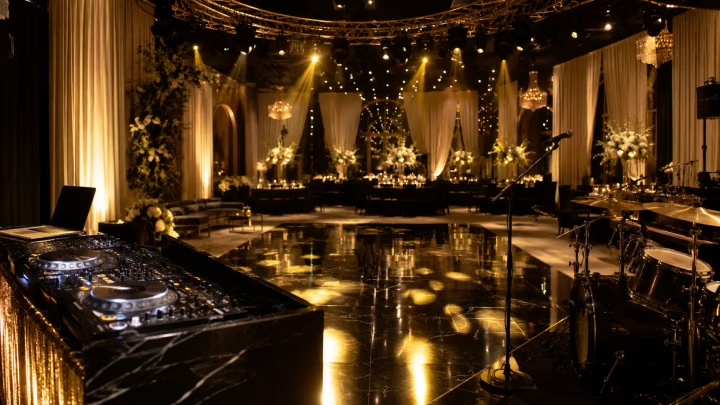
Once dancing begins, the purpose changes.
The sound needs more physical energy and guests expect it to be louder.
Even then, louder is not automatically better.
A harsh system at maximum output can feel smaller and more tiring than a well-balanced system running comfortably.
Quality matters more than raw level.
The venue can have the final say
Some venues have strict noise policies because of neighbours or licensing.
Others use sound limiters that cut power if the room exceeds a set level.
That is important information for bands, DJs and any amplified entertainment.
If your venue has a limiter, tell suppliers before booking rather than discovering it at setup.
I have a separate article on wedding venue sound limiters because they deserve more explanation than one paragraph.
Speaker position changes perceived volume
Two speakers placed well can sound more even and less aggressive than one speaker being pushed very hard.
The same applies to where guests are sitting.
If a speaker is directly beside one table, those guests may feel the music is deafening while people at the far end think it is quiet.
This is why I care about setup position rather than simply finding the nearest socket.
Ask what you want the room to feel like
For a ceremony: clear and intimate.
For drinks: lively but conversational.
For dinner: present but comfortable.
For dancing: energetic and physical.
Those are better instructions than “keep it at 70%”.
A percentage on a volume control means nothing from one venue to another.
Protect the atmosphere, not the meter reading
I pay attention to how guests respond.
Are people leaning across tables to hear each other? Too much.
Is the room talking straight over the performance? Possibly too little.
Are people staying close to the music, reacting and still able to speak? That is normally the sweet spot.
The best wedding entertainment sounds powerful when it needs to and disappears into the room when it should.
That balance is much more important than being loud.