
In this article
Wedding morning timings: how much buffer do you actually need?
Most wedding timelines look beautifully tidy on paper.
Hair at 8.30. Makeup at 9.15. Photographer at 10.30. Dresses on at 11.45. Ceremony at 1.00.
Then real life arrives.
Somebody cannot find an earring. The flowers are delivered to the wrong room. A button comes off. The photographer wants five more minutes near the window because the light is perfect. The registrar needs to speak to you privately. Suddenly the schedule that looked generous has no air left in it.
That is why I am a big fan of buffer time.
Not an hour of everybody sitting around doing nothing. Just enough space that one small delay does not start pushing every supplier and every part of the ceremony backwards.
Work backwards from the ceremony
The ceremony start time is the fixed point.
From there, work backwards and include the things that happen immediately before it, not only the obvious preparation jobs.
If the ceremony is at 1pm, ask:
- When does the registrar or celebrant need to meet you?
- How long will photographs before the ceremony take?
- Are you walking across a hotel, driving to a church or simply going downstairs?
- Who needs to be dressed before photographs begin?
- When are flowers, buttonholes and bouquets arriving?
Those little transitions are where a schedule often loses time.
Being ready early feels completely different to rushing
From a musician's point of view, I can normally tell when a wedding morning has been running comfortably.
Guests arrive gradually. The ceremony team know where everybody is. There is time to adjust something if needed. The room feels settled before the entrance begins.
When the morning has overrun badly, you feel it in the room. Guests are looking at the door, suppliers are checking watches and the person coordinating the ceremony is trying to get information from three places at once.
A late ceremony is not a disaster. It happens. But avoiding unnecessary pressure is much nicer for everybody.
Build a real gap before you need to leave the room
If you think you need to be ready at 12.30, I would not schedule the final job to finish at 12.29.
Give yourself a genuine gap.
That might only be 20 or 30 minutes, but it creates room for photographs, a drink of water, a toilet trip, a missing bouquet or simply a moment where nobody is touching your hair.
It is also useful if parents, bridesmaids, groomsmen or children need organising. The more people involved, the more likely somebody will temporarily disappear exactly when they are needed.
Do not forget supplier setup
Some suppliers need access before guests arrive.
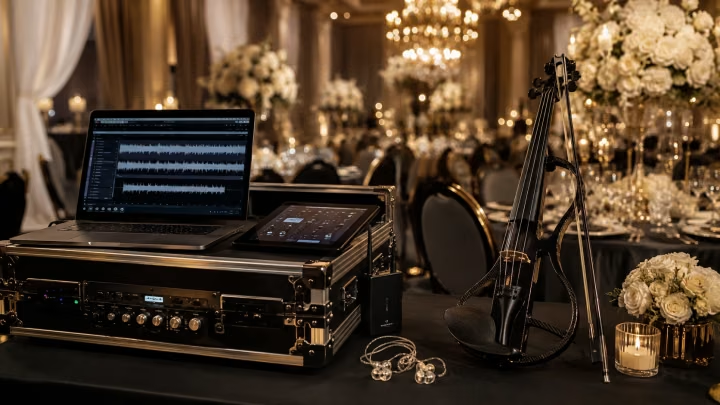
A florist may be dressing the ceremony room. The photographer may want detail shots. A musician needs to bring equipment in, check power and sound, and be ready before the first guest enters.
This is why supplier arrival information matters. If the venue has a separate loading entrance or the ceremony room is locked until a certain time, tell people beforehand.
The more of that is sorted before the wedding morning, the less anybody needs to interrupt you with questions.
Hair and makeup are common pressure points
This is not because hair and makeup artists are slow. It is because they are doing detailed work on several people, often while the room is busy and people are coming and going.
If five people need hair and makeup, do not base the schedule on five perfect back-to-back appointments with no interruptions.
Ask the professionals how long they genuinely need and believe them.
If they suggest an earlier start than you expected, there is normally a reason.
Children change the maths
Small children are brilliant at ignoring schedules.
If they are part of the ceremony, build in even more flexibility. A flower girl who needs food, a page boy who has suddenly decided the suit is unacceptable or a baby who needs changing can absorb ten minutes without trying.
That is normal. Plan for normal rather than for a perfect advert.
A calm wedding does not need to start at dawn
Buffer does not mean making everybody get up at 4am.
It means being realistic about transitions and not booking every minute at full capacity.
If you are still shaping the full running order, the article on building a wedding-day timeline is worth reading alongside this one.
The best wedding mornings I see are not necessarily the most organised-looking. They are the ones with enough space in the plan that a minor delay stays minor.
That is the whole point of buffer time.